paff’s programme depends on being able to engage the people we want to work with: those in marginalised groups. By definition these people are excluded from social, political and cultural conversations. It is for this reason that paff is necessary: to find ways to engage the people most at risk from climate-related impacts in a conversation in which their voices are heard and their responses amplified.
paff’s approach to inclusion and relevance is grounded in the organisers’ experience of working in communities across the UK. But in this project we will be taking the best practice learnings we have accumulated, and developing them in the context of specific places and communities. paff’s method of engagement pursues four steps:
i) Start from place
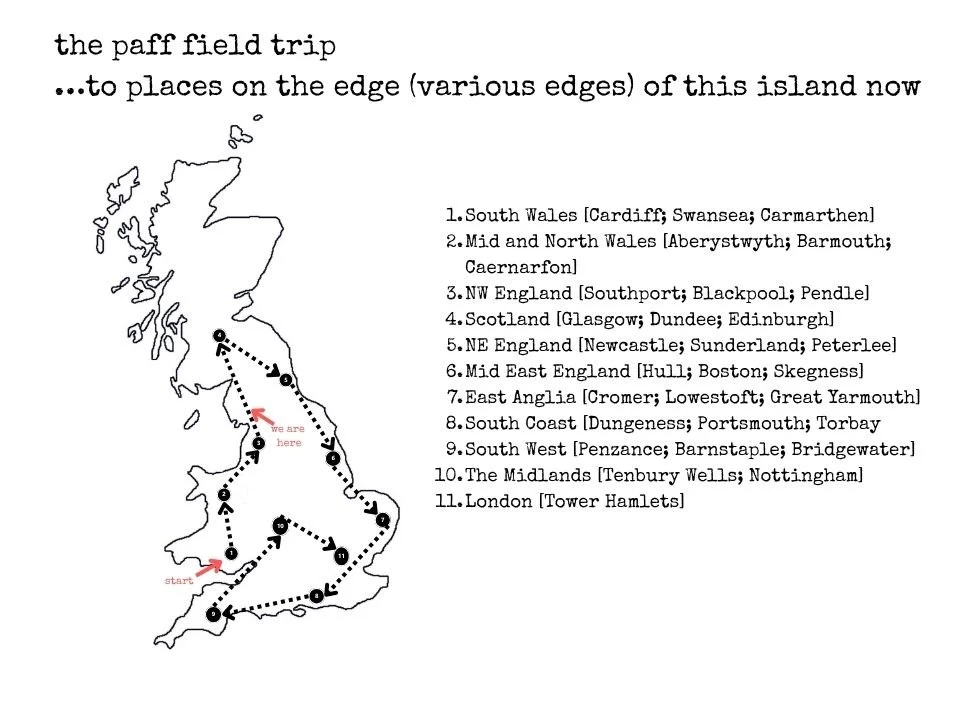
identifying places around the UK which are ‘on the edge’: already feeling the effects of climate change
ii) Be people-centred
working with people in each place to identify the communities ‘on the margins’: most at risk from climate-related impacts
iii) Develop the work together
working with at risk communities and the local organisations that represent them to develop a programme of activities and a body of work which speaks to their preoccupations
iv) Amplify people’s voices
taking the work people have made to the next place, connecting vulnerable communities together, and building a shared vision for the future